
Flickering Lights at Home: Harmless Issue or Warning Sign?
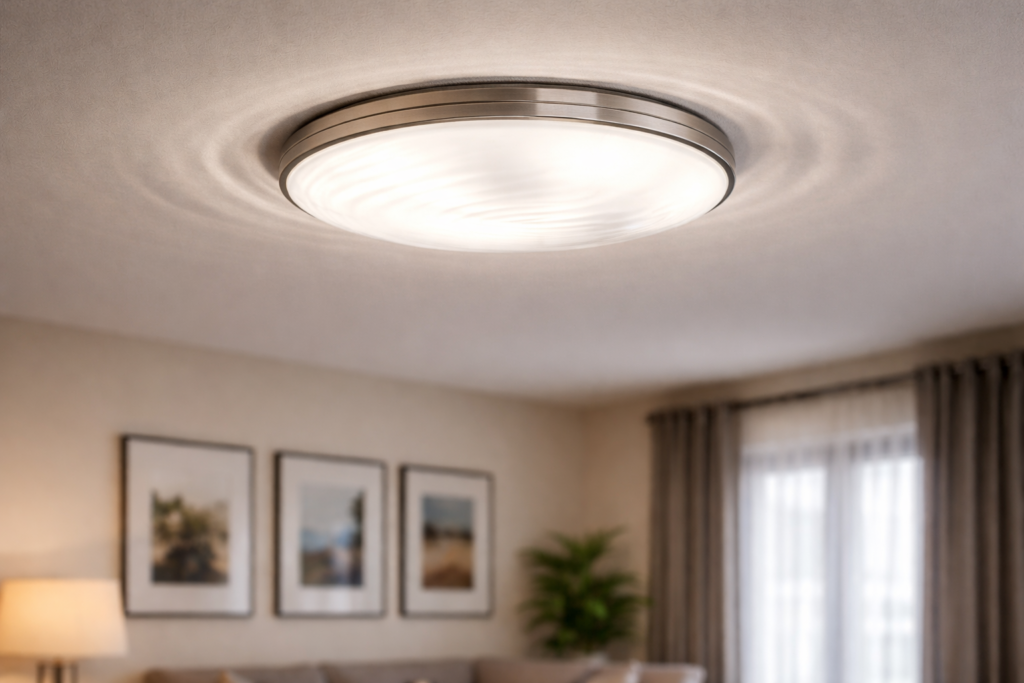
Flickering Lights at Home: Harmless Issue or Warning Sign?
A flickering light is easy to dismiss, especially if it only happens occasionally. Sometimes it is caused by a loose bulb or a bulb reaching the end of its life. Sometimes it is a sign of a bigger electrical issue.
The key is to work out whether the flicker is isolated to one fitting or happening across several lights.
Start with the simplest explanation
1. Check the bulb
A loose or failing bulb is one of the most common reasons for flickering. If the fitting is off and cool, check whether the bulb is secure.
2. Notice whether only one light is affected
If one light flickers but others are fine, the issue may be local to that bulb or fitting. If several lights flicker, the cause may be elsewhere.
3. Think about when it happens
Does it flicker when a large appliance switches on? Does it happen randomly? Does it affect lights in one room or across the house?
Possible causes
Common causes include:
- Loose or ageing bulb
- Faulty light fitting
- Problems with the switch
- Circuit overload
- Loose wiring connections
- Wider supply or electrical issues
Warning signs you should not ignore
Be more cautious if you notice:
- Several lights flickering together
- Dimming when appliances start
- Buzzing from switches or fittings
- Burning smells
- Heat from switches or ceiling fittings
These can point to issues beyond a simple bulb problem.
What not to do
- Do not ignore repeated flickering across several rooms
- Do not continue using fittings that smell hot or burnt
- Do not open switches or fittings yourself unless qualified
- Do not assume all flickering is harmless
When to call an electrician
Call a professional if:
- Replacing or securing the bulb does not help
- More than one light is affected
- The flickering keeps returning
- You notice buzzing, heat, or smell
- The issue seems linked to other power problems in the home
Final advice
Flickering lights can be minor, but they can also be an early sign of a fault worth checking. If the cause is not obviously just the bulb, or if more than one light is affected, it is safer to get professional advice rather than wait.
FAQ
Can a bad bulb really cause flickering?
Yes. A loose or failing bulb is one of the most common causes.
Why do my lights flicker when the kettle turns on?
This can suggest the circuit is under strain or there is a wider electrical issue worth checking.
Is flickering dangerous?
Not always, but if it is frequent, widespread, or paired with smell or heat, it should be treated seriously.
More Electrical tips
 ⚡ Electrical
 Why Does My Circuit Breaker Keep Tripping?
Why Does My Circuit Breaker Keep Tripping? If your circuit breaker keeps tripping, it is doing its job by helping protect your…
Read article → ⚡ Electrical
 Burning Smell from a Socket or Switch: What to Do Immediately
Burning Smell from a Socket or Switch: What to Do Immediately A burning smell coming from a socket, switch, or fitting is…
Read article → ⚡ Electrical
 Power Socket Not Working? Safe Checks You Can Do First
Power Socket Not Working? Safe Checks You Can Do First A power socket that suddenly stops working can be frustrating, especially if…
Read article →


