
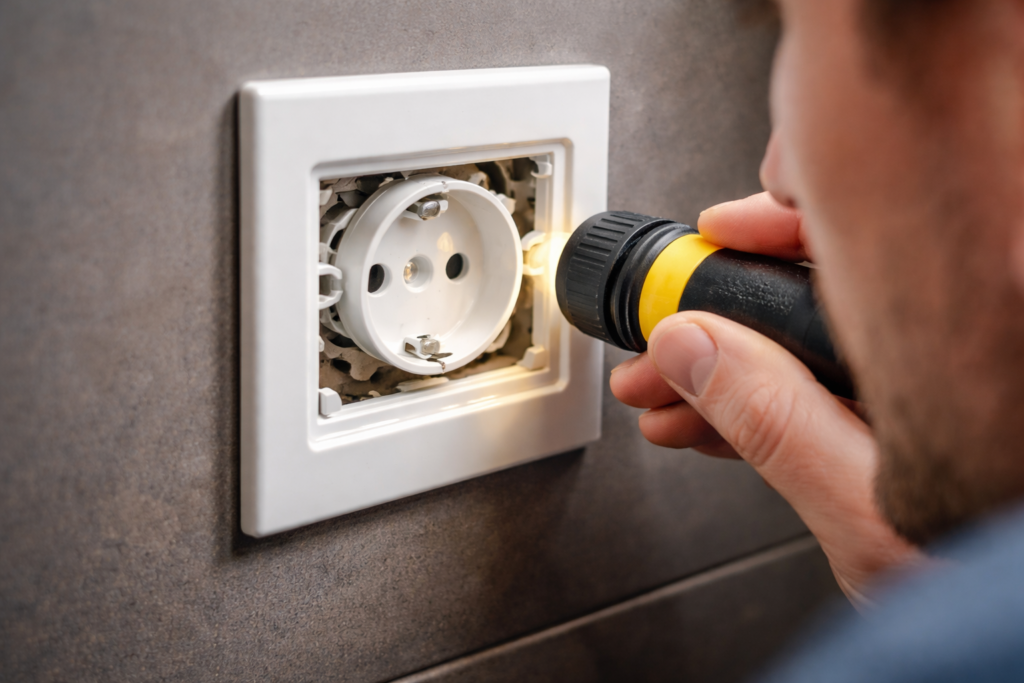
Power Socket Not Working? Safe Checks You Can Do First
A power socket that suddenly stops working can be frustrating, especially if you rely on it every day. Sometimes the cause is minor. Other times it can point to a wider electrical issue that needs professional attention.
The most important thing is to stay on the safe side. Electrical problems should never be handled casually.
Start with these basic checks
1. Test the appliance first
Before assuming the socket is faulty, plug the appliance into a different working socket. This helps you rule out a problem with the device itself.
2. Try a different device in the socket
If a second device also does not work, the issue is more likely to be the socket or the circuit.
3. Check whether nearby sockets are affected
If one socket is not working but others nearby are fine, the issue may be isolated. If several sockets are dead, it may be linked to a tripped circuit or a wider fault.
4. Look at the consumer unit if you can do so safely
If a breaker has tripped, that may explain the loss of power. If you are comfortable checking it safely, see whether one switch is out of position.
Possible causes
A socket may stop working because of:
- A tripped breaker
- A loose or damaged socket
- A problem with the connected circuit
- Internal wear over time
- Faults caused by overloading
Warning signs to take seriously
Be extra cautious if you notice:
- Burning smells
- Buzzing sounds
- Scorch marks
- Heat around the socket
- Loose fittings
- Intermittent power
These signs can indicate a more serious issue and should not be ignored.
What not to do
- Do not open the socket faceplate yourself unless you are qualified
- Do not keep using extension leads as a long-term workaround
- Do not keep plugging in appliances if the socket shows signs of damage
- Do not ignore heat, smell, or visible marks
When to call an electrician
Call a professional if:
- The socket still does not work after basic checks
- More than one socket is affected
- A breaker keeps tripping
- There are signs of heat, smell, or damage
- You are unsure what caused the problem
Final advice
A dead socket may be a simple fault, but electrical issues should always be treated carefully. A few safe checks can help you understand the situation, but if the problem is not immediately obvious, it is best to get a qualified electrician involved.
FAQ
Can one faulty appliance stop a socket working?
Yes. A faulty appliance can trip a circuit or cause a breaker to switch off.
Should I replace the socket myself?
Not unless you are properly qualified to do electrical work safely.
Is one dead socket an emergency?
Not always, but if there is heat, smell, sparks, or visible damage, it becomes urgent.
More Electrical tips
 ⚡ Electrical
 Flickering Lights at Home: Harmless Issue or Warning Sign?
Flickering Lights at Home: Harmless Issue or Warning Sign? A flickering light is easy to dismiss, especially if it only happens occasionally.…
Read article →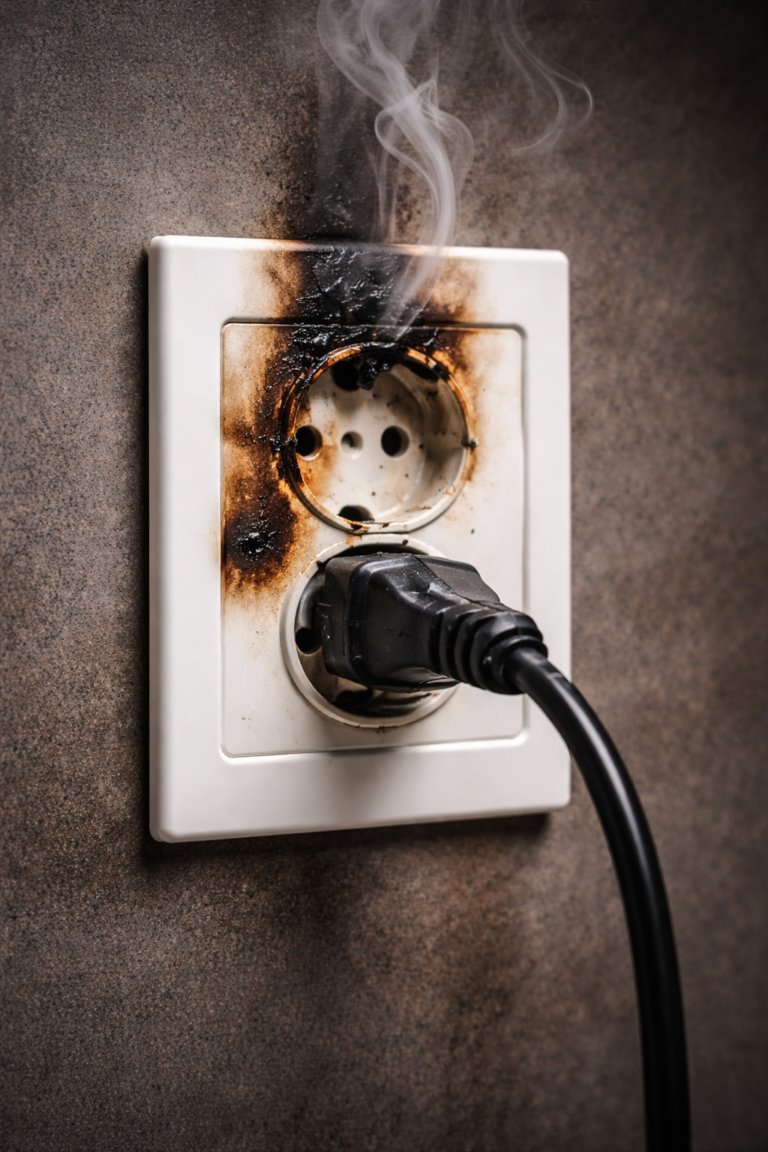 ⚡ Electrical
 Burning Smell from a Socket or Switch: What to Do Immediately
Burning Smell from a Socket or Switch: What to Do Immediately A burning smell coming from a socket, switch, or fitting is…
Read article →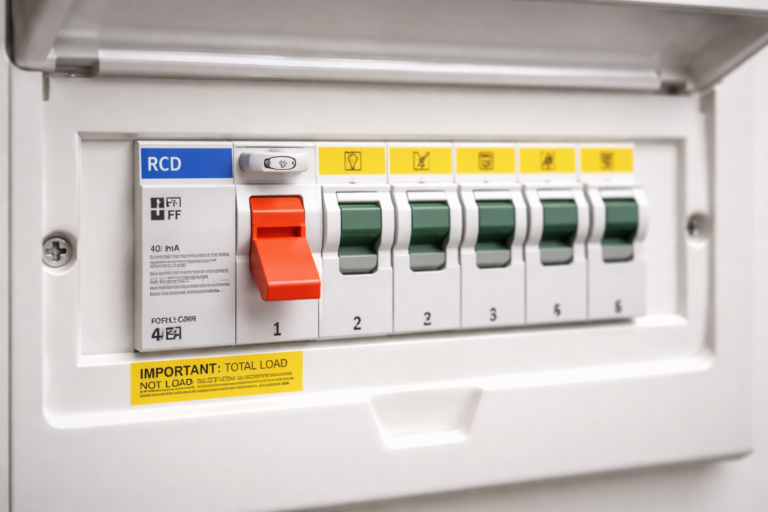 ⚡ Electrical
 Why Does My Circuit Breaker Keep Tripping?
Why Does My Circuit Breaker Keep Tripping? If your circuit breaker keeps tripping, it is doing its job by helping protect your…
Read article →