
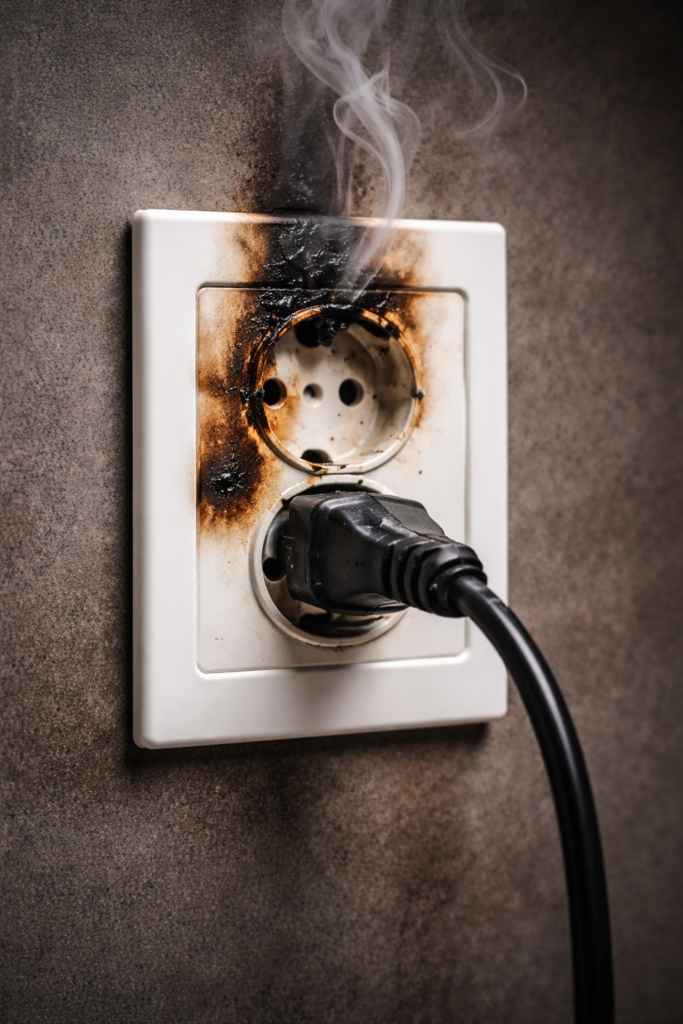
Burning Smell from a Socket or Switch: What to Do Immediately
A burning smell coming from a socket, switch, or fitting is never something to ignore. Even if there is no visible smoke, it can signal overheating, damaged wiring, or a dangerous fault.
This is one of those situations where caution matters more than convenience.
What to do straight away
1. Stop using it immediately
Do not plug anything else into the socket or keep using the switch.
2. Turn off the power if it is safe to do so
If you can safely isolate the affected circuit or switch off power at the consumer unit, do so.
3. Keep people away from the area
Do not let anyone continue touching or testing the fitting.
4. Watch for signs of worsening
Look for smoke, visible marks, crackling, or heat. If there is an active fire risk, follow fire safety procedures and contact emergency services.
Possible causes
A burning smell may be linked to:
- Overheating from overloading
- Loose internal connections
- Damaged wiring
- Worn sockets or switches
- Faulty appliances affecting the circuit
What not to do
- Do not keep using the socket “just one more time”
- Do not spray anything on it
- Do not open it up yourself unless qualified
- Do not assume the smell will go away on its own
When to call an electrician
In this case, you should call an electrician as soon as possible. A burning smell is not a wait-and-see problem.
Final advice
Electrical smells should always be taken seriously. If a socket or switch smells burnt, stop using it immediately and get it checked. Acting quickly is the safest approach and can help prevent a much more serious problem.
FAQ
What if the smell disappears after a while?
It still needs checking. The fault may still be there even if the smell fades.
Could the appliance be the problem rather than the socket?
Yes, but until the cause is confirmed, both should be treated with caution.
Should I switch the whole power off?
If you can do so safely, isolating the affected circuit is a sensible step.
More Electrical tips
 ⚡ Electrical
 Light Switch Not Working Properly? What It Could Mean
Light Switch Not Working Properly? What It Could Mean If a light switch feels loose, does not respond properly, or only works…
Read article →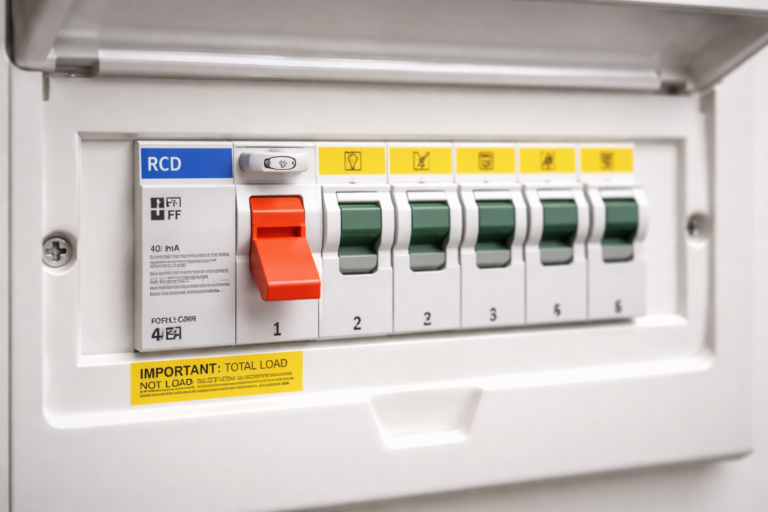 ⚡ Electrical
 Why Does My Circuit Breaker Keep Tripping?
Why Does My Circuit Breaker Keep Tripping? If your circuit breaker keeps tripping, it is doing its job by helping protect your…
Read article → ⚡ Electrical
 Power Socket Not Working? Safe Checks You Can Do First
Power Socket Not Working? Safe Checks You Can Do First A power socket that suddenly stops working can be frustrating, especially if…
Read article →